Wayne discussing a product with customers in a Singapore workspace
Product leadership · Across markets

Transform
clarity into growth.

I'm Wayne Tan.

I help businesses find their next growth opportunity—and bring the teams, products, and commercial discipline to make it work.

My career story

PAYMENTS & LENDING / PLATFORMS / AI

SCROLL TO DISCOVER
Selected experience
Funding Societies / CardUpEnd-to-end 0→1 ownership of new business verticals
GrabDriving product growth towards company acquisition
LivspacePlatform expansion across APAC & the Middle East
ShopeeNeo-banking at scale · 40M users
PercolataML forecasting for Fortune 500 enterprises
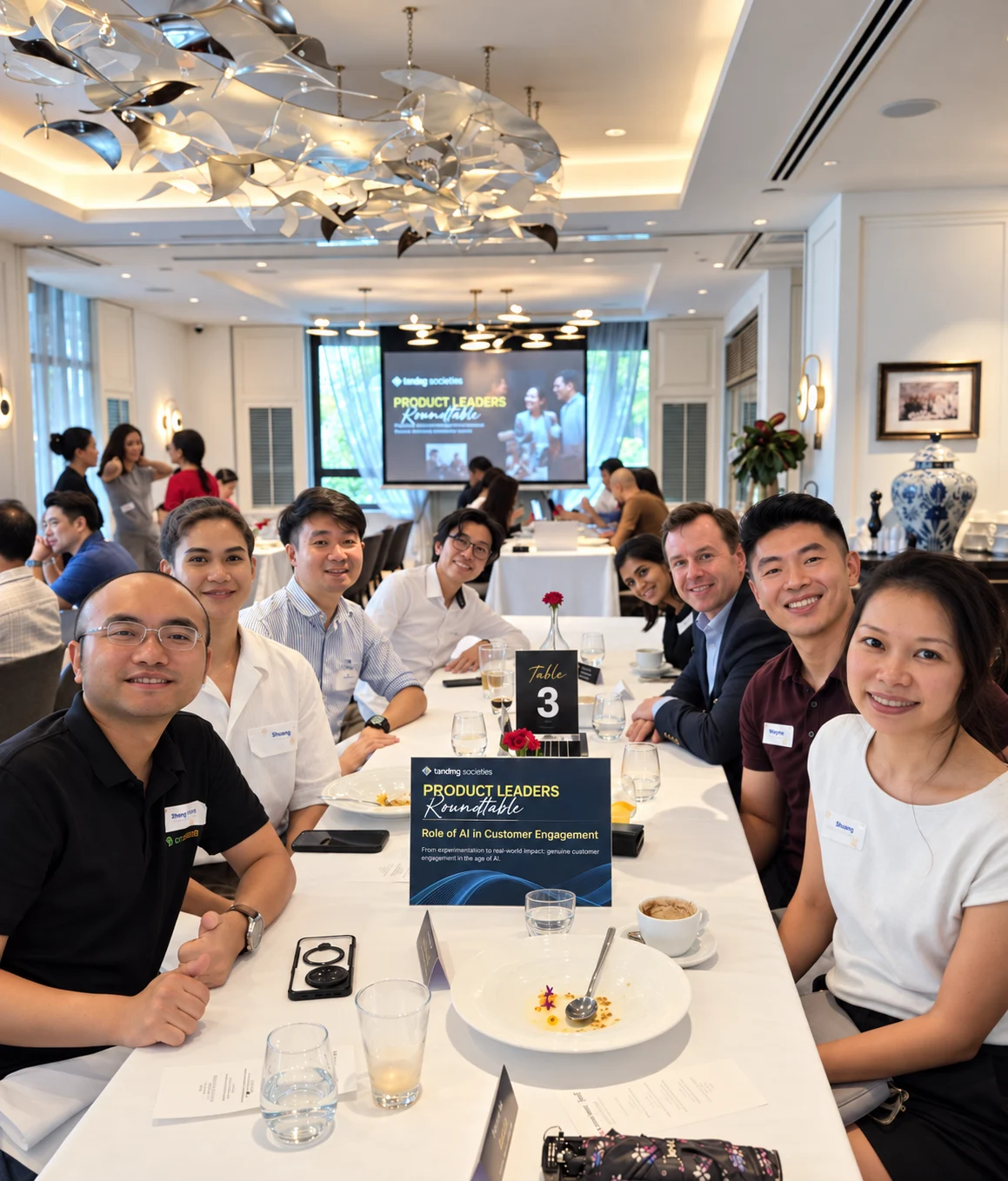
Product Leaders Roundtable, with Wayne seated second from the right
PRODUCT LEADERS ROUNDTABLEPRODUCT, PEOPLE & PERSPECTIVES
01 / My career story

Product judgment.
Commercial focus.
Regional impact.

I bring a commercial lens to product leadership: finding where to grow, aligning the people needed to deliver, and owning what happens after launch. My focus is APAC and SMEs, with experience spanning 0→1 GTM, business transformation, and regional expansion.

01 Move complex businesses forward.

I turn competing priorities into a clear path to delivery, aligning commercial, technology, operations, and risk teams across matrix organisations and highly regulated environments.

02 Connect product decisions to growth.

I build and lead GTM teams with end-to-end roadmap and P&L ownership—connecting market entry and launch to adoption, revenue, and a sustainable operating model.

03 Build the capacity to work with AI.

I develop AI-native product experiences and upskill teams to adopt and experiment with AI, translating new capabilities into practical customer and operational value.

02 / Career highlights

Media coverage
& highlights.

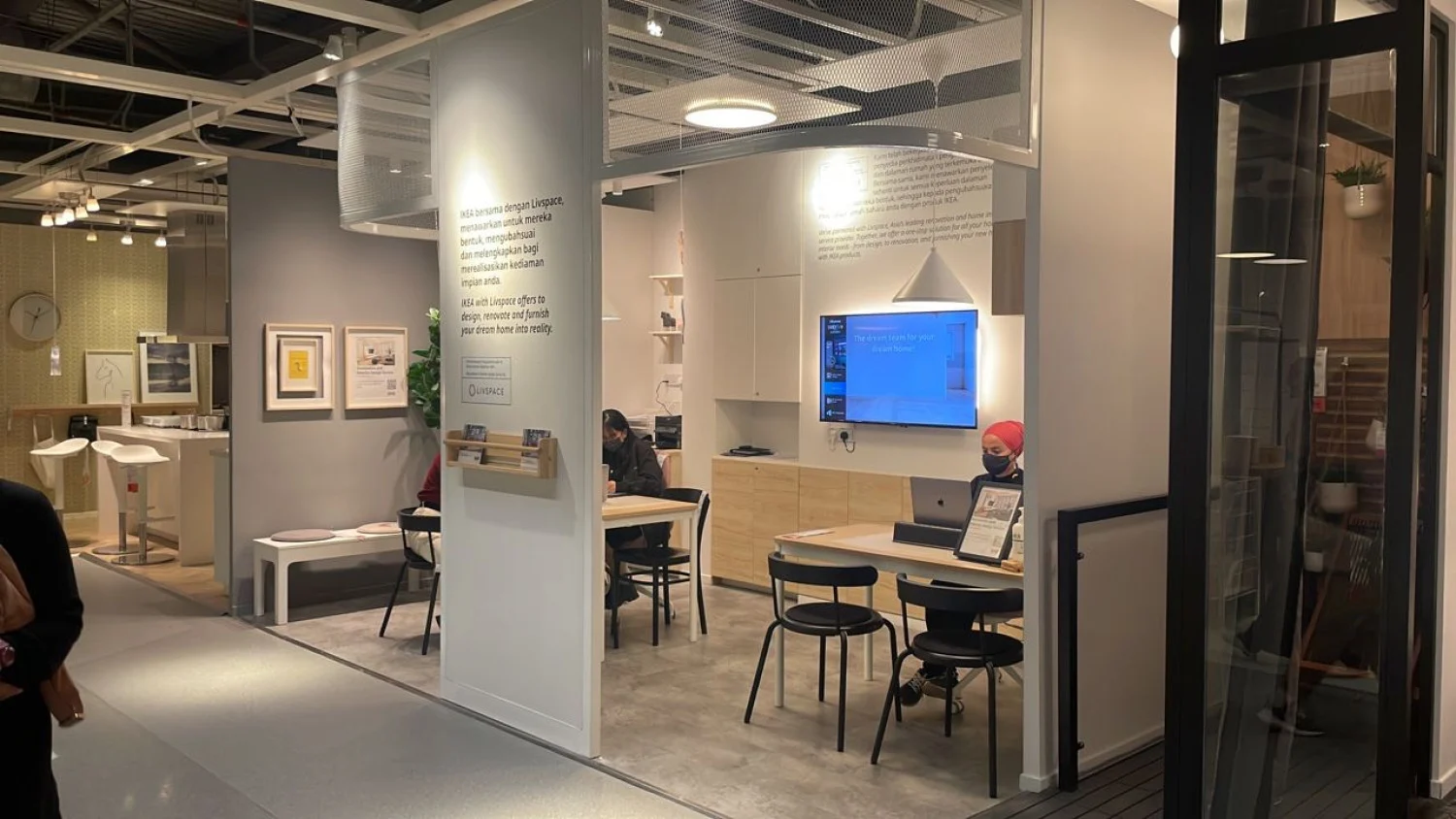
Livspace interior design and renovation studio inside IKEA Damansara
Livspace × IKEA / Malaysia expansion
12,000IKEA products connected to a 3D design journey

Making regional expansion tangible.

I led the product integration that brought IKEA’s live catalogue into Livspace’s 3D design experience—supporting more than 300 designers and turning physical-store discovery into an actionable home-design journey.

View the full story View coverage
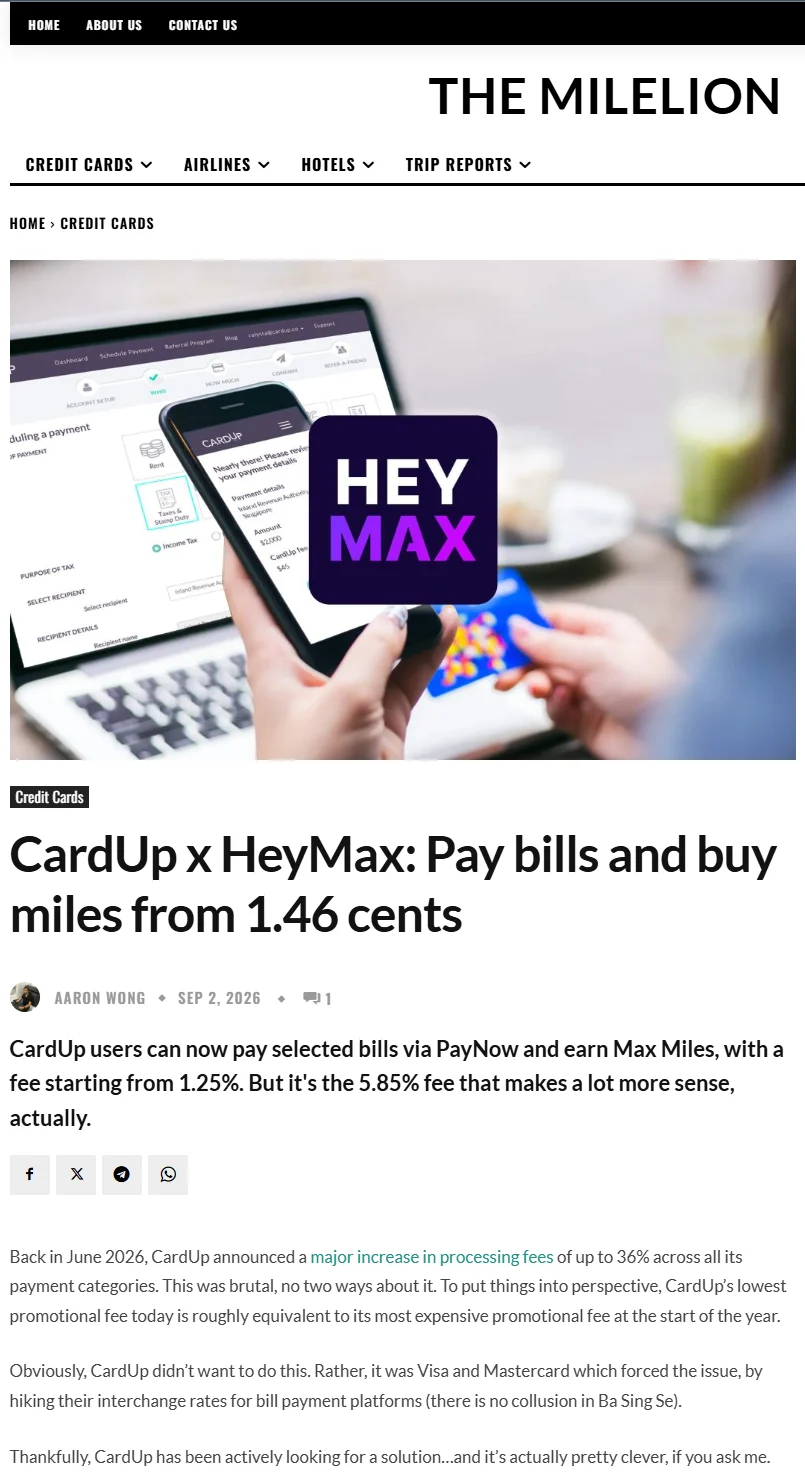
The MileLion coverage of the CardUp and HeyMax partnership
CardUp × HeyMax / SME payments
PayNowbill payments connected with Max Miles rewards

Giving necessary payments a clearer reward.

I helped shape a partnership experience that extended CardUp’s SME payments proposition beyond transaction processing—letting eligible users earn rewards on selected bill payments.

View the full story View coverage
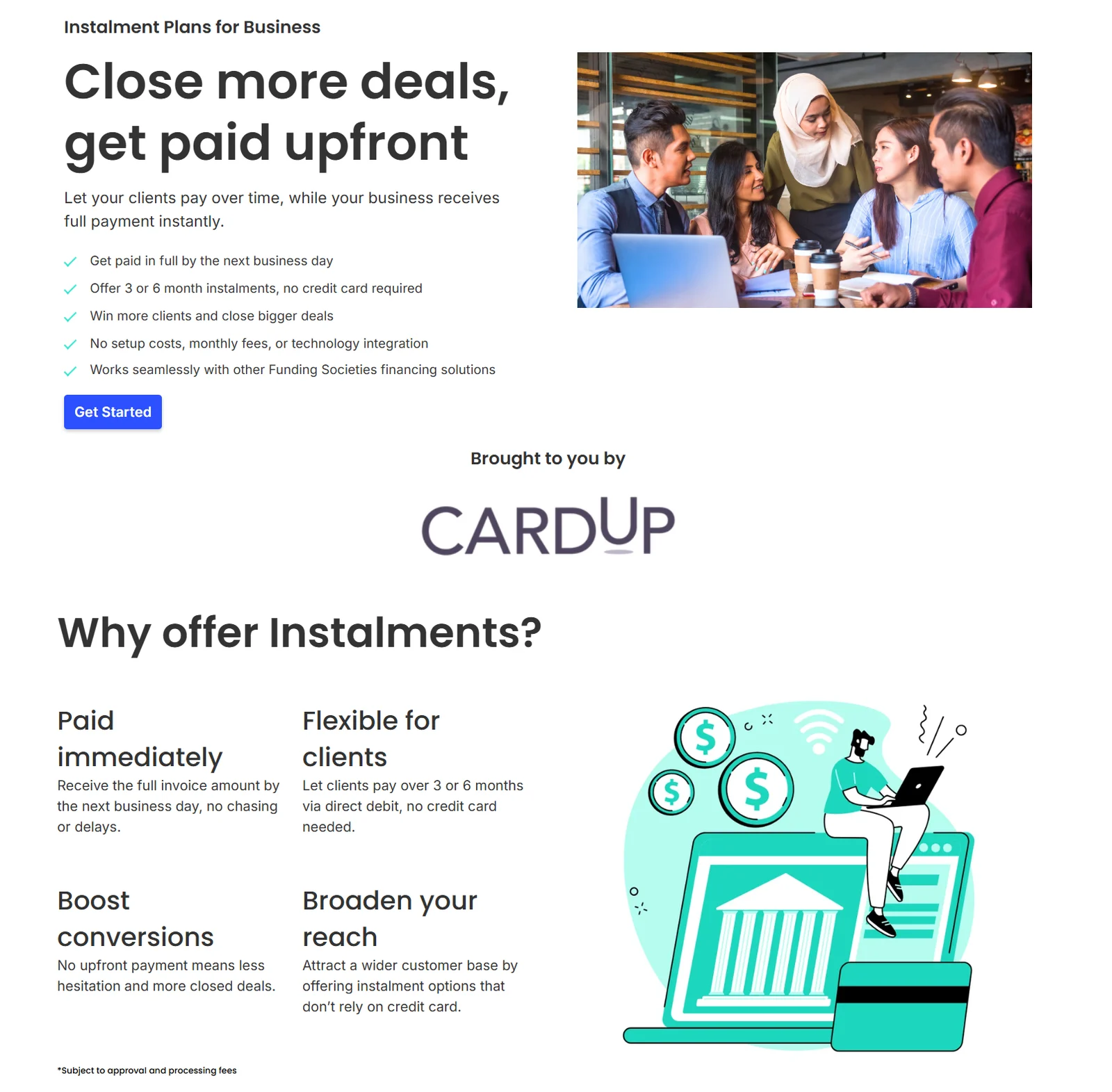
Funding Societies and CardUp Instalment Plans for Business
Funding Societies / CardUp · B2B BNPL
0→1launch and end-to-end P&L ownership

Building a new business around flexible payments.

I launched the Malaysia B2B instalment plan and owned its P&L end to end—from proposition and pricing to GTM, seller onboarding, and commercial performance. Businesses receive payment upfront while eligible buyers pay over three or six months.

View the full story Explore the product
03 / Career progression

Experience that builds
on itself.

My roles and portfolios span enterprise machine learning, regional payments, market expansion, and new SME financing businesses.

  1. Jan — Dec 2018PercolataProduct Manager · Machine Learning

    Led enterprise forecasting product strategy, reporting to the CEO and translating Fortune 500 customer requirements into ML, data-pipeline, and backend priorities.

  2. Dec 2019 — Jun 2021ShopeeTechnical Product Manager · Regional Payments

    Managed regional payments products, including the ShopeePay Indonesia launch, KYC flows, and ML-driven campaign-fraud and account-takeover prevention.

  3. Jul 2021 — Oct 2022LivspaceProduct Lead · Commercialisation & New Markets

    Led the SEA product team, regional launches and commercialisation across Singapore, Malaysia, and Saudi Arabia, with post-launch P&L and IKEA platform integrations.

  4. PRESENTFunding Societies / CardUpSenior Product Manager · Onboarding & New Platforms

    Own onboarding and new-platform experiences across SME payments and lending, including 0→1 business verticals, B2B BNPL P&L, platform unification, and AI-enabled operations.

04 / Selected résumé

My career,
in detail.

Explore the challenges, decisions, and outcomes which shaped how I think and lead in product management.

01

Funding Societies / Modalku

Payments, lending & regional platforms

Building a seller-led B2B instalment plan

~RM50M originated · ~RM20M disbursed through B2B instalment plan

The challenge

Funding Societies wanted to expand Malaysian SME financing through B2B instalment plan, bringing instalment financing into the relationship between SME sellers and their buyers. The early journey assumed borrowers would complete onboarding themselves. In practice, sellers needed to explain the financing, lead the application, and bring buyers in for verification. Slow onboarding, unclear eligibility, and limited application visibility created friction at the point where sellers needed to build trust and convert demand into financing.

My contribution

I owned the product line end to end: commercial model, pricing, go-to-market, credit and compliance alignment, product design, and partner enablement. I made seller-assisted onboarding the default, introduced borrower pre-qualification, removed the CardUp onboarding dependency, and designed a seller dashboard for application status. A co-branded landing page and sales activation guide helped partners explain the offer and address trust and identity-verification questions.

The outcome

The B2B instalment plan originated approximately RM50 million and disbursed approximately RM20 million. Around 30 SMEs joined the programme in its first quarter after launch. Onboarding improved from 1–2 weeks to approximately 1–2 days, and approximately 62% of active sellers referred a loan. The product brought distribution, eligibility, and onboarding into one seller-led journey, making financing easier to introduce and complete.

0-to-1 launchb2b lendingBNPL

Building a new payment rail into a profitable consumer product

~S$150M projected annual volume · Net profitability 120% above initial target

The challenge

CardUp’s Make Payments product had relied on cards since launch. Introducing PayNow meant more than adding another checkout option: the payment platform needed to support a new funding method, consumers needed a compelling reason to adopt it, and the rewards economics had to remain profitable as usage grew. The HeyMax partnership connected PayNow bill payments with Max Miles, creating a consumer proposition that could also diversify CardUp’s payment volume beyond cards.

My contribution

I owned the product end to end, from platform architecture and commercial design to the HeyMax partner relationship, operations, customer service, and business targets. I led the payment-platform rearchitecture to support PayNow as a reusable funding method across CardUp payment flows. A configuration-driven approach made miles costs adjustable and enabled PayNow to be extended across payment options. I also introduced real-time cost monitoring to track the product’s economics and protect profitability as adoption scaled. Together, these capabilities gave the team control over where the new rail was offered, how rewards were priced, and whether growth was translating into profitable volume.

The outcome

The product is growing its user base week on week and is on track to process approximately S$150 million annually. Current net profitability is 120% above the initial target, which was benchmarked against the card-payment baseline. PayNow became Make Payments’ second way to pay since CardUp launched, establishing a new consumer rewards proposition and a path to diversify beyond the card rail. The S$150 million figure is projected annual payment volume.

Independent coverage · The MileLion, September 2026 ↗

payment architectureconsumer growthproduct profitability

Designing AI support for growing payment volumes

~4,900 monthly tickets · 60–70% repetitive intent

The challenge

Customer support demand was growing almost linearly with payment volume. Across approximately 4,900 tickets each month, around 40% were FAQ-style questions and 60–70% involved repetitive intent. As transaction volumes grew, this recurring workload threatened to consume more team capacity and make service quality harder to maintain. The challenge was to identify what AI could safely resolve while preserving a dependable path to human support.

My contribution

I owned the business case, phased product scope, and evaluation approach, working across customer experience, operations, compliance, engineering, data, and leadership. Phase one focused on knowledge-base answers; phase two extended to data-aware support for a broader set of customer requests. I defined automation boundaries, service-quality gates, and repeatable scenario-based evaluations, tying the roadmap to the volume and complexity of customer needs.

The outcome

The resulting programme defined a path from FAQ assistance to data-aware support covering approximately 2,700 monthly tickets in phase two, with an 85%+ customer-satisfaction target. It gave teams a concrete scope and evaluation framework for handling a substantial share of recurring demand as payments scaled. Coverage and satisfaction figures were planning targets, rather than achieved production results.

AI productops automationcustomer support

Creating a shared customer identity for payments and lending

CardUp × Funding Societies · One customer foundation for Elevate

The challenge

Elevate combined payments and lending on a single platform for SMEs, but CardUp and Funding Societies represented the same customer differently across CRM, support systems, and backend data. This made onboarding a client to Elevate extremely difficult: teams could not consistently connect the customer, their records, and their existing product relationships across systems. A unified customer experience depended on resolving that identity problem first.

My contribution

I led the customer-identification work across the payments and lending platforms, translating onboarding friction into shared identity and data-model requirements. I aligned CRM, engineering, data, support, and commercial teams on how customer records should connect, including duplicate-detection and merge rules, historical data backfill, and backward-compatible changes for existing workflows. Revenue definitions, account ownership, and attribution were supporting parts of the same foundation, so reporting would follow a more consistent view of the customer.

The outcome

The work established the customer-identity requirements and roadmap needed to connect onboarding, borrower profiling, and payments–lending cross-sell. The supporting CRM work addressed more than 200 duplicate company records and reduced manual sales cleanup by approximately 15 hours per week. The central contribution was a coherent customer foundation for Elevate; more dependable revenue reporting and attribution were downstream benefits.

customer identityplatform integrationdata model design

Guiding a payments and lending platform through transition

Customer continuity · Operational controls · Platform transition

The challenge

Elevate brought business payments and lending together through a partner-supported platform. As the proposition evolved, its onboarding, pricing, verification, and settlement arrangements needed closer alignment with the wider CardUp and Funding Societies operating model. The priority was to strengthen that foundation while preserving customers’ access to funds and continuity of lending services, and to assess the platform’s longer-term direction.

My contribution

I aligned leadership, the partner, compliance, risk, and delivery teams on a phased transition approach. I refined settlement and collection flows, tightened approval controls, and defined replacement customer journeys, cutover criteria, and migration safeguards toward native CardUp and Funding Societies infrastructure. This gave decision-makers a practical view of the options and their implications for customers and operations.

The outcome

The work maintained customer access to funds and lending continuity while strengthening operational controls. When the business subsequently chose to retire Elevate, the migration blueprint informed the transition and consolidation work. The contribution was a structured approach to platform change that kept customer needs and service continuity central to the decision.

regulated fintechpaymentslending
02

Grab / Chope

Product Consultant · Chope Deals

Improving a dining-deals product central to Chope’s revenue

Chope Deals accounted for 55% of Chope revenue

The challenge

Chope Deals was the Singapore dining-deals and voucher business, distinct from Chope’s broader restaurant-reservations network. It contributed 55% of Chope revenue, making the path from discovering an offer to completing a purchase commercially important. My September 2022–May 2024 consultancy covered that consumer journey and the backend supporting it, before Chope’s acquisition by Grab.

My contribution

I worked across recommendations, discovery, add-to-cart, checkout, Google Pay, and backend modernisation. The scope connected customer-facing purchase friction with the platform constraints underneath it: improving how diners found and paid for deals while preparing the business for future changes and integration. The following stories separate the payment, conversion, and architecture contributions.

The outcome

The consultancy supported a significant revenue-generating business, with measurable checkout and shopping-journey improvements detailed below. Chope Deals also advertised more than 1,000 participating Singapore restaurants on an undated gift-card page; that describes the offering’s footprint, not restaurants I acquired or a count measured during my consultancy.

Chope Deals’ advertised restaurant count is undated and describes the offering, rather than a count tied to the consultancy period.

Consumer commerceRevenue growthProduct strategy

Helping diners move from restaurant discovery to purchase

13% QoQ recommendation/add-to-cart improvement · 22.5% lower abandonment

The challenge

Chope Deals needed customers to find relevant restaurant offers and carry that interest through add-to-cart and checkout. Weak recommendations and friction between those stages could lose a potential purchase before payment began. The work therefore addressed the connected shopping journey, rather than treating discovery, the cart, and checkout as unrelated screens.

My contribution

I redesigned the discovery and checkout experience, improving recommendations and the add-to-cart journey while reducing purchase friction. Together with the Google Pay launch, this covered both sides of conversion: helping diners reach a buying decision and making the transaction easier to complete.

The outcome

Recommendation and add-to-cart performance improved by 13% quarter-on-quarter since launch, and cart abandonment fell by 22.5%. The figures describe the reported shopping-journey measures; the improvement was a stronger path from relevant discovery to completed purchase.

DiscoveryRecommendationsConversion

Removing payment friction from dining-voucher purchases

30 seconds → 5 seconds · Nearly S$7M annual payment volume

The challenge

Chope Deals customers had already selected a dining offer when they reached a checkout that took approximately 30 seconds. That made payment a distinct source of friction at the end of the purchase journey. The product served 30,000 monthly active users, so introducing a faster payment method addressed a recurring part of the consumer experience rather than an isolated checkout inconvenience.

My contribution

I launched Google Pay as a checkout method and simplified the payment journey, shortening the steps required to complete a dining-voucher purchase. This was a focused payment intervention alongside the broader discovery and cart redesign: one improved how customers reached a purchase decision, while the other made that decision faster to complete.

The outcome

Checkout time fell from approximately 30 seconds to 5 seconds—a sixfold speed improvement. The Google Pay rail processed close to S$7 million in annual payment volume. The 30,000 monthly active users describe the wider product user base; the payment volume describes transactions processed through the rail.

PaymentsCheckoutGoogle Pay

Preparing Chope Deals for future platform integration

Backend modularisation · Reduced legacy dependencies

The challenge

Chope Deals depended on legacy backend architecture that constrained platform flexibility and future integration. Customer-facing improvements still needed a technical foundation that could evolve. The task was therefore to reduce structural dependencies in the deals business, not simply add more features on top of the existing architecture.

My contribution

During my product consultancy, I modularised and rearchitected the backend infrastructure, reducing reliance on legacy systems. The work positioned the business unit for subsequent acquisition and integration by making the platform more adaptable. It complemented the discovery and checkout work by addressing the system that would need to support future product changes.

The outcome

The result was a more adaptable platform foundation and improved integration readiness. Grab acquired Chope in July 2024, after the consultancy ended in May; my work prepared for subsequent integration into Grab Dine-in Deals rather than completing that integration during the consultancy.

Acquisition announcement · The Straits Times, July 2024 ↗

Platform architectureModularisationIntegration readiness
03

Livspace

Commercialisation & new markets

Proving Livspace’s expansion model beyond India

Singapore, Malaysia and Saudi Arabia · Regional growth supporting the Series F story

The challenge

As Livspace worked toward its Series F fundraise, it needed to demonstrate consistent revenue growth beyond India, its home market. Launching in new countries was only part of that challenge: the business had to show that its model could scale across regions and the full home-interiors value chain, from customer discovery and design to purchase and project delivery. Local requirements and operating differences made it difficult to replicate the home-market platform without adaptation.

My contribution

I led regional product work across Singapore, Malaysia, and Saudi Arabia, connecting platform localisation with market readiness, go-to-market execution, and post-launch P&L. I worked with country and commercial teams to identify where local workflows needed to differ and where shared platform capabilities could support scale. The remit covered the end-to-end customer and operating journey, so market entry was tied to a functioning local business rather than a platform launch alone.

The outcome

The platform launched across three markets, establishing a broader regional operating footprint and a foundation for revenue growth outside India. This work supported the expansion narrative behind Livspace’s Series F fundraise by demonstrating how the business could operate across markets and the wider value chain.

regional expansionmarket launchcommercialization

Owning the regional roadmap and team behind commercial growth

2.5× gross merchandise value · US$30M+ additional platform revenue

The challenge

After market entry, Livspace needed a regional product organisation that could turn local demand into sustained commercial performance. Country priorities had to compete for shared delivery capacity, while roadmap decisions needed to support revenue, transaction growth, and operating performance across Asia-Pacific and Saudi Arabia.

My contribution

I owned the entire regional product roadmap for APAC and Saudi Arabia, with responsibility for commercialisation and post-launch P&L. I directly hired and managed three other product managers, setting priorities and coordinating delivery across the regional portfolio. Working with business leadership, commercial teams, and country operators, I connected the team’s roadmap to gross merchandise value, revenue, and the operating needs of each market.

The outcome

The regional commercialisation effort delivered 2.5× growth in gross merchandise value and more than US$30 million in additional platform revenue. My role combined roadmap accountability, direct team leadership, and commercial ownership, translating regional business priorities into coordinated product execution.

commercializationmonetizationGMV growth

Turning the IKEA partnership into an integrated design-to-purchase experience

IKEA partnership · 12,000 catalogue items · 300+ designers

The challenge

Livspace’s IKEA partnership needed to translate into a useful customer and designer experience. A home visualisation could inspire a purchase only if the products shown connected to available inventory. Bringing IKEA’s catalogue into Livspace’s design workflow made the partnership part of the product itself and supported the broader regional expansion strategy.

My contribution

I worked across IKEA, Livspace leadership, business development, and product teams to connect the partnership with regional priorities and delivery. I led the integration of IKEA’s live inventory catalogue into Livspace’s proprietary 3D modelling tool, bringing 12,000 product items into the designer’s workflow. This joined partner coordination with concrete product execution: designers could build visualisations around available products instead of working from disconnected catalogue references.

The outcome

The integration supported more than 300 designers and helped thousands of homeowners visualise their homes with available IKEA products. It turned the strategic partnership into a practical design-to-purchase capability, supporting regional expansion while connecting product discovery more closely to the shopping decision.

IKEA partnershipcatalogue integrationregional expansion

Joining the showroom and digital home-design journey

700–800 customers/month · 12.7% uplift in on-site conversion/signing

The challenge

Home-design customers move between discovery, consultation, payment, and project execution. Livspace’s experience store needed those stages to feel connected, bringing the digital platform into the physical consultation rather than leaving the showroom as a separate touchpoint.

My contribution

I helped co-launch the omnichannel experience store, integrating design discovery, payments, and site-management capabilities into the on-site journey. The work connected digital and physical touchpoints around customer consultation and decision-making.

The outcome

The store served approximately 700–800 customers per month. The work contributed to a 12.7% increase in the on-site conversion/signing rate.

omnichannel retailexperience storecustomer journey
04

Shopee

Regional payments & trust

Bringing Shopee’s customers into everyday wallet payments

ShopeePay Indonesia · 40 million users · Online and offline payments

The challenge

Shopee already had substantial penetration into Indonesia’s e-commerce user base. The next goal was to bring those customers onto ShopeePay for both online purchases within Shopee and offline QR payments. That required a wallet people could access and use beyond an e-commerce checkout, with regulated onboarding and risk controls built into the customer journey.

My contribution

I owned KYC flow integration and risk-control design within the Indonesia wallet launch, working across payments, compliance, risk, engineering, and regional launch teams. I connected the identity-verification and onboarding requirements to the broader adoption goal: enabling existing Shopee customers to use the wallet for online commerce and everyday offline payments.

The outcome

I helped launch ShopeePay in Indonesia with integrated identity verification and risk controls, supporting a consumer wallet serving 40 million users. The launch established the foundation for moving an existing e-commerce audience into broader payment use cases, including QR-based payments outside the Shopee ecosystem.

paymentswalletKYC

Making ShopeePay usable across Indonesia’s local payment network

Alfamart wallet top-ups · Alto integration · QRIS routing

The challenge

A wallet designed only around Shopee checkout would limit how customers could fund and use it. To become useful in everyday life, ShopeePay needed local top-up access and compatibility with Indonesia’s national QR payment standard, allowing customers to pay merchants beyond Shopee’s own ecosystem.

My contribution

I worked on the Alfamart integration for ShopeePay wallet top-ups, localising the funding journey around a familiar retail network. I also worked with Alto on QRIS routing so the wallet could support the national standard and connect customers to QR-based merchant payments outside Shopee. These integrations linked wallet funding with real-world acceptance.

The outcome

The integrations expanded the ways customers could top up and spend their wallet balance: through Alfamart for funding and QRIS-compatible merchant payments for offline use. They supported ShopeePay’s shift from an e-commerce payment option toward a wallet customers could use across the local payments ecosystem.

wallet localisationQRISpayment integrations

Reducing account takeover while keeping legitimate payments moving

63% fewer P1 account-takeover cases · 13% fewer campaign-fraud false positives

The challenge

Account takeover could lead directly to customer monetary loss, while campaign abuse threatened promotional budgets. Controls also had to distinguish fraud from legitimate customer activity: overly aggressive blocking could disrupt payments, frustrate users, and reduce campaign participation. The challenge was to strengthen prevention without adding disproportionate friction to the payment experience.

My contribution

I designed and launched machine-learning-based fraud prevention with data scientists, ML engineers, payments, and risk teams. The architecture combined UUID-based signals, device fingerprinting, velocity limits, and location triangulation using IP and retrieved location data. I incorporated fraud rules into the payment experience, connecting behavioural signals and model outputs to controls for account takeover and campaign abuse.

The outcome

The work reduced P1 account-takeover cases involving monetary loss by 63% and reduced campaign-fraud false positives by 13%. It helped keep campaigns within budget without significant customer complaints or drop-off, improving account protection while allowing more legitimate activity to proceed.

fraud preventionmachine learningpayments risk
05

Percolata

Machine learning & enterprise products

Pivoting from foot-traffic analysis to enterprise forecasting

Machine vision → Enterprise sales forecasting

The challenge

Percolata’s initial direction used machine vision to track in-store foot traffic. Enterprise sales forecasting presented a more commercially attractive opportunity, requiring a decision about the customer problem the business should pursue—not just how to improve the existing technology application. The role was based in Palo Alto, working directly with the CEO and the teams building the ML product.

My contribution

I owned product strategy and the pivot recommendation, reporting directly to the CEO. I redirected the product toward enterprise sales forecasting and connected customer requirements with ML, data-pipeline, and backend engineering priorities. The decision shifted the commercial focus while retaining machine learning as the underlying product capability.

The outcome

The pivot repositioned Percolata around a higher-value enterprise problem. It established the product direction for the forecasting work, where collaboration with Fortune 500 customers and engineering teams produced the accuracy improvement described in the next story.

AI productmachine learningproduct strategy

Translating enterprise requirements into better forecasts

36% improvement in forecasting performance, measured by RMSE

The challenge

Fortune 500 clients needed more accurate forecasts from Percolata’s AI-driven tooling. The challenge was not confined to the model: customer requirements had to translate into priorities across machine learning, the data pipeline, and backend delivery. My product role connected those customer and technical perspectives.

My contribution

I acted as the bridge between enterprise customers and the ML, pipeline, and backend engineers building the forecasting product. I translated business requirements into product and execution priorities, keeping delivery aligned with the forecast-quality problem clients needed solved.

The outcome

The work delivered a 36% improvement in forecasting performance for Fortune 500 clients, measured by root mean square error (RMSE), a measure of prediction error. This gives the product story a concrete model-quality outcome alongside the strategic shift toward enterprise forecasting.

AI productmachine learningforecasting
05 / Writing

Thinking,
out loud.

Essays & field notes / Coming soon

New perspectives on product, growth, and AI. Coming soon.